All Categories
Featured

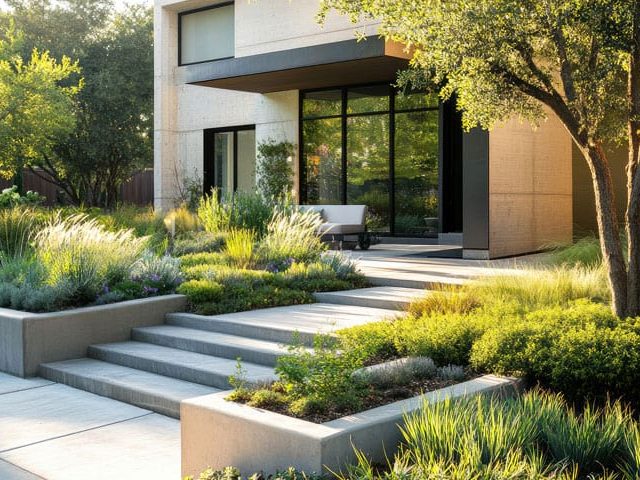
Future-Proofing SoCal Commercial Assets for Drought
Table of Contents
Los Angeles landscapers are professionals in designing gardens that show personal design while likewise considering the local environment. They use thoughtful garden design to develop an immersive experience with a selection of plants that prosper in the region.
: Motivated to promote regional biodiversity and ease of care.: Tactically chosen to develop year-round visual interest. From Zen-inspired harmony to lively, lavish arrangements, the goal is to develop an unique and sustainable garden environment that matches the rest of the landscape. When looking for landscaping services in Los Angeles, individuals frequently have questions about costs, discovering respectable services, and what to anticipate throughout the landscaping procedure.
Commercial Landscaping PomonaOn average, house owners may invest between $1,500 and $5,500 for a full landscaping job. Evaluations for landscaping services in Los Angeles can be discovered on platforms such as Yelp, Angie's List, and Google My Company. Prospective customers ought to look for in-depth reviews that speak with the quality and reliability of the services rendered.
Aspects such as the intricacy of the work and the landscaper's experience can influence the rate. Inexpensive landscaping services in Los Angeles can be sourced through regional directories and neighborhood boards. One need to think about services that balance cost with positive customer feedback and an excellent portfolio of completed tasks. For a standard landscaping task in Los Angeles, one need to prepare for costs beginning around $3,000 to $6,000, depending on the job's scale and the materials needed.
How to Scale Service Quality Via Regional Hubs?
Individual suggestions and consultation meetings can likewise offer insight into their dependability and work ethic.
The Hydration Station Effort Program permits non-residential customers to set up or recondition openly available drinking water stations on homes with repayment chances for eligible candidates.
What exactly is a "sustainable landscape" and how can you produce your own? Merely put, sustainable landscaping includes choosing plants that are adapted to your climate and microclimate, and implementing environmentally sound upkeep practices.
Optimizing Irrigation Efficiency With California Landscape Upgrades
In such a xeric climate it is exceptionally essential that our minimal water is utilized as successfully as possible. Every drop of water that falls on your site should remain on your site and be used to support your landscape objectives.
These basins collect, infiltrate, and store rainwater in the soil, where it can be accessed by our plants and utilized to develop much healthier soil. Getting shade in the right location is vital to the overall health and satisfaction of our landscapes.
Not to discuss they develop a dubious, peaceful, and welcoming environment that draws us out of our homes and into our landscapes. And if all of that is inadequate, fully grown shade trees can increase the resale worth of your home by up to 15%. Coupling our native trees with passive rainwater harvesting strategies makes sure accelerated growth rates while reducing local water inputs.
That is why EcoSense develops landscapes that do not count on extra watering once developed. We achieve this with careful passive rainwater harvesting preparation and water budgeting to guarantee our landscapes can grow on typical rainfall alone. We also use durable succulents and targeted seed blends that don't require irrigation for facility.
Commercial Landscaping PomonaMaximizing Irrigation Efficiency Through SoCal Landscape Updates
Located near the Santa Monica Mountains in a garden-like setting, UCLA's landscape offers break and connection, along with habitat for school wildlife, as highlighted in this UCLA Publication piece: Pockets of Paradise on Campus. Recently we have actually transitioned decorative turf areas to native and environment durable plants, in addition to activating outside research study areas.
UCLA's Landscape Strategy supports the Sustainability Strategy's water, landscape and biodiversity, and planetary health and human health areas. UCLA's efforts in taking an ecological approach to grounds maintenance and insect management were awarded a Gold level Green Premises Certification by Re: wild Your School. In 2025, UCLA finished a complete tree stock and an Urban Forest Management Plan to support much better long term take care of UCLA's varied urban forest. The 2021 Sustainable LA Grand Obstacle Environment Health Report Card for Los Angeles County offers a thorough take a look at the area's efforts in approaching a more resistant environment and neighborhood for people and native wildlife. UCLA specialists also serve on the City of LA Biodiversity Professional Council and contribute to establishing policies and metrics for the City of LA Biodiversity program.Sage Hill, located in the northwest corner of campus, is 3.4 acres of native California habitat that is home to a high variety of plants and animals consisting of 50 native higher plant types, 7 native mammal species, 17 butterflies types, and practically 30 citizen and migratory bird types. Overseen by the Institute of Environment and Sustainability, Sage Hill works as an outside learning area, providing hands-on, meaningful teaching and undergraduate research study opportunities for trainees in all fields.

Latest Posts

Measuring the ROI of Green Investments

Scaling Green Projects Across Urban Areas

Navigating 2026 ESG Benchmarks for Properties